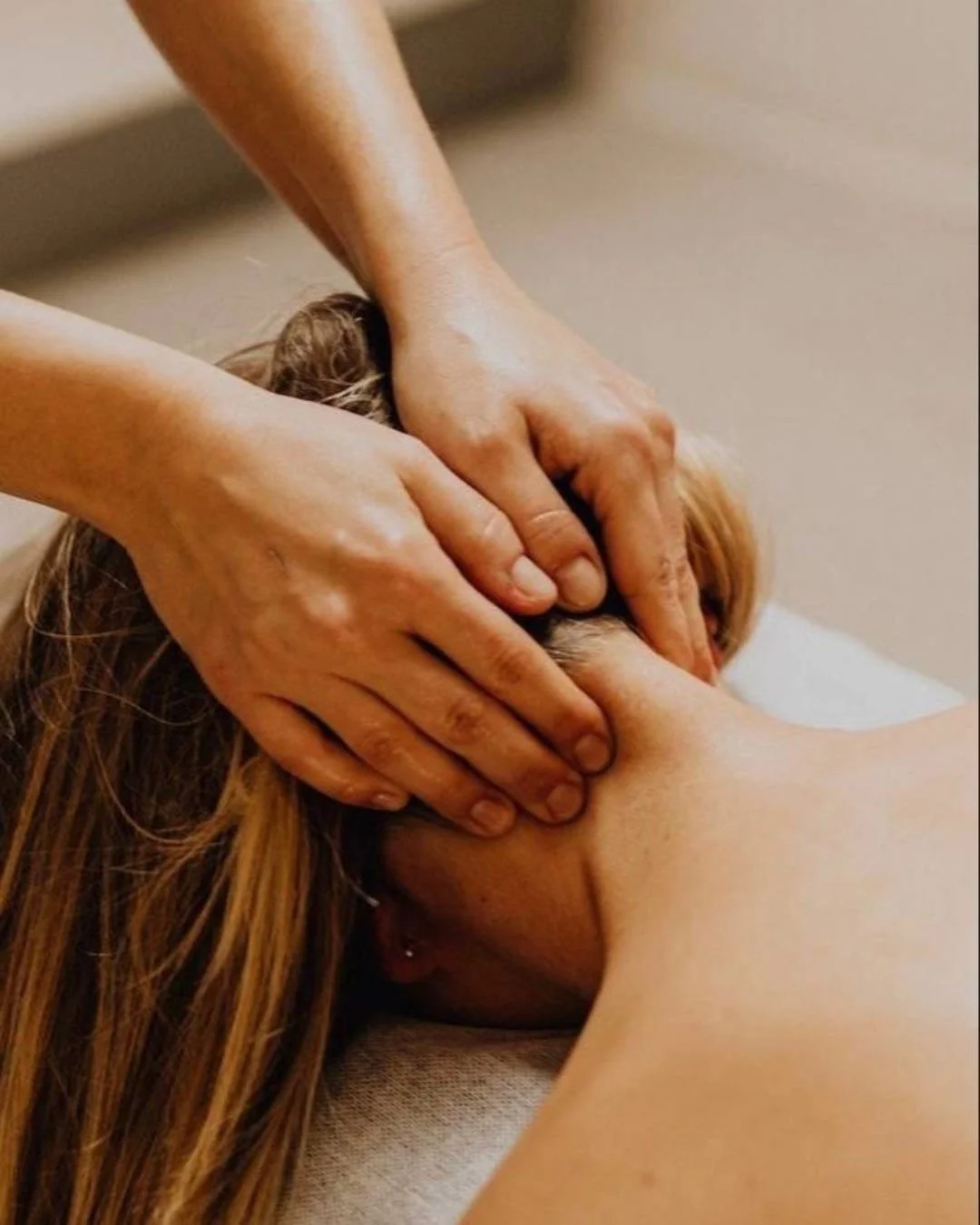
As the days shorten and the air cools, our bodies instinctively begin to turn inward. The outer world quiets: leaves fall, winds rise, and light thins - and we feel that same pull within ourselves. Late fall and and winter invite us to slow down and to nourish our inner flame.
Oftentimes, in the modern world, we resist this call. The rhythm of the workplace and of western culture is in direct opposition to the rhythm of the seasons, staying busy and overstimulated while our intuitive bodies crave warmth, stillness, and touch.
Ayurveda teaches us that this time of year is governed first by Vata, the dosha of wind and movement, and later by Kapha, the dosha of earth and water. Vata season, from late fall into early winter, brings qualities that are cold, dry, light, and erratic; if we don’t balance these qualities, we may feel scattered, anxious, depleted: prone to immune weakness and catching winter colds and viruses. As winter deepens, Kapha’s heaviness begins to settle in, sometimes leading to stagnation, lethargy, or melancholy.
These seasonal shifts show up in our bodies, resulting in a tightening in the muscles, a subconscious holding on in the shoulders, belly, and breath. The mind speeds up while the body slows down, creating a disconnect between the two. We may feel scattered, tense, tired but unable to rest, seeking warmth but unable to soften enough to receive it.
…and that’s exactly where Thai massage becomes a kind of medicine.

The Healing Rhythm of Thai Massage
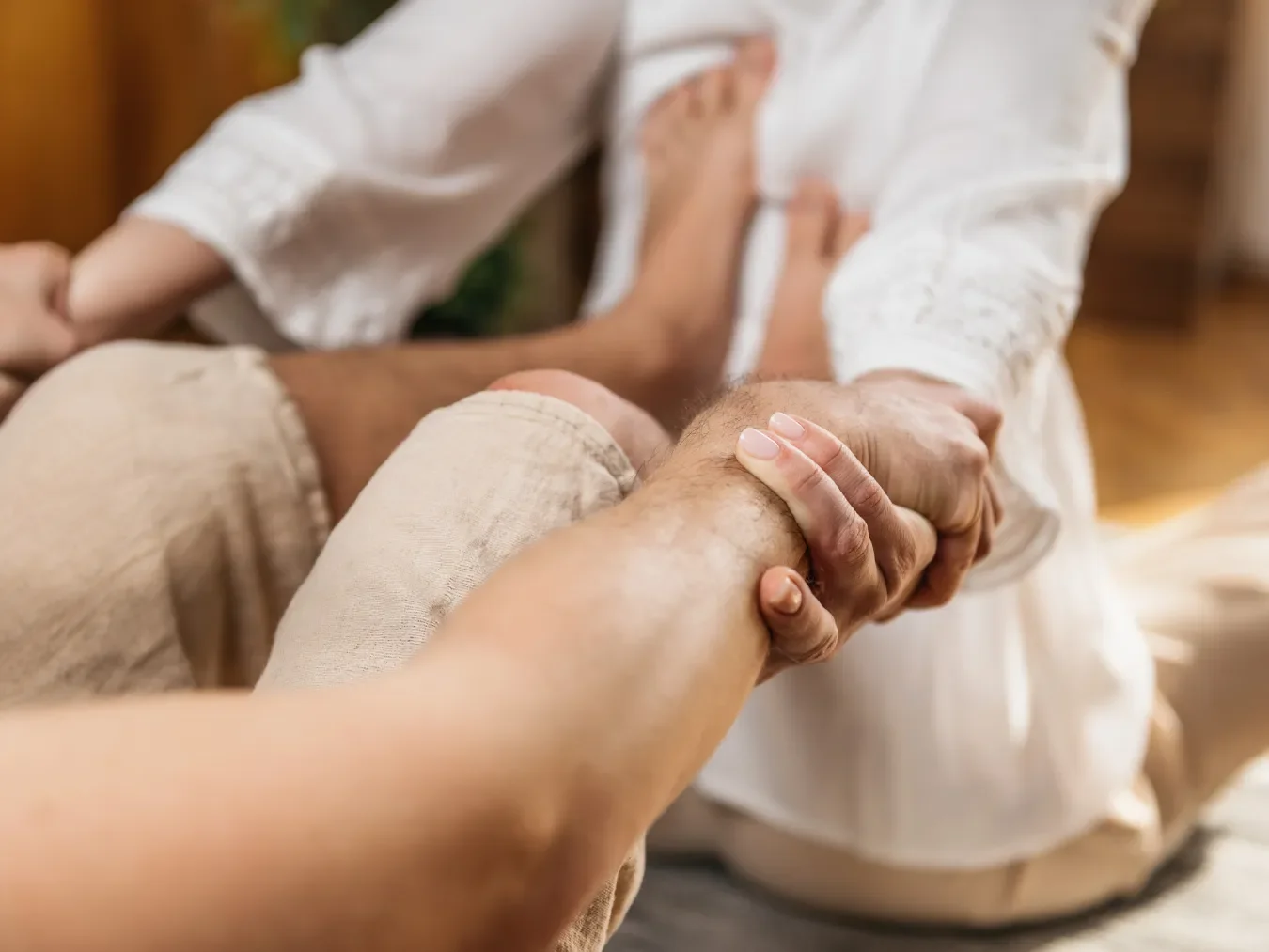
Thai massage is an ancient form of bodywork rooted in Buddhist and Ayurvedic traditions. Sometimes described as “yoga being done to you,” it combines rhythmic compressions, assisted stretches, and energy line work in a meditative flow. The practitioner moves with the breath, using palms, thumbs, forearms, and even feet to guide the receiver into a deep state of release and restoration.
Unlike many forms of massage, Thai massage invites both active participation and complete surrender. You’re fully clothed, supported on a comfortable floor mat, and gently guided through movements that open joints, lengthen muscles, and awaken circulation. The practitioner works in a flowing sequence involving compressions and stretching that brings the whole system into a relaxed and balanced state. People often report feeling both awakened and rejuvenated at the end of a session.
Energetically, Thai massage stimulates the flow of prana (life force) in the body, easing deep-rooted stiffness and enhancing flexibility while promoting lymphatic flow and boosting immunity. By working along the body’s energy lines, Thai massage supports the natural flow of prana and helps rebalance areas that have become depleted or overstimulated.
Touch as Nourishment
But perhaps the greatest gift of Thai massage lies not just in its physical effects, but in its reminder of connection. In the darker half of the year, we naturally spend more time indoors and often less time in community. We may not realize how little nourishing touch we receive in the darker months, or how profoundly our bodies respond when that need is met.
Conscious, mindful touch releases oxytocin, lowers stress hormones, and helps the body shift out of “fight or flight” into a state of repair and receptivity. It reminds us that we are held - not just by another human being, but by the greater web of life itself.
In this sense, receiving Thai massage can be considered a practice of reinhabiting the body. It’s a form of meditation through surrender. The more we soften, the more we feel; the more we feel, the more we can heal.
A Seasonal Practice of Care
Each season asks something different of us. Autumn asks us to let go. Winter asks us to rest and restore. Thai massage supports both: it helps the body release what it no longer needs while nourishing the tissues and calming the mind for the deep rest ahead.
This style of bodywork is especially helpful when Vata-related flare ups arise: stiff joints, low back and hip pain, headaches, upper body tension, and the scattered discomfort that often shows up as the air gets colder and drier. As Kapha increases later in winter, it can lift the sense of heaviness, sluggishness, and stuckness that often come with it.
To receive massage in winter isn’t indulgence… it’s maintenance of your life force. It is just as essential as a warm coat and scarf when you go out into a snowstorm. Massage sustains the inner flame through the long, cold nights, reminding us that warmth is not only found outside ourselves.
An Invitation to Receive
In my practice, I offer Northern-style Thai massage, which emphasizes slower, more gentle, nourishing movements than in a southern-style practice. Each session is customized to your needs, and may include sound vibration therapy upon request, allowing the tones of Himalayan and crystal bowls to resonate through the body’s energy channels for deeper harmonization.
This is your invitation to let go and receive.
Sessions are offered locally, with booking details here: www.wildheartwellness.love/wellness-packages
I’m also available for retreats and special events if you’d like to include Thai massage or sound-infused bodywork in your offering.
Have you tried a Thai Massage? What did you think?